

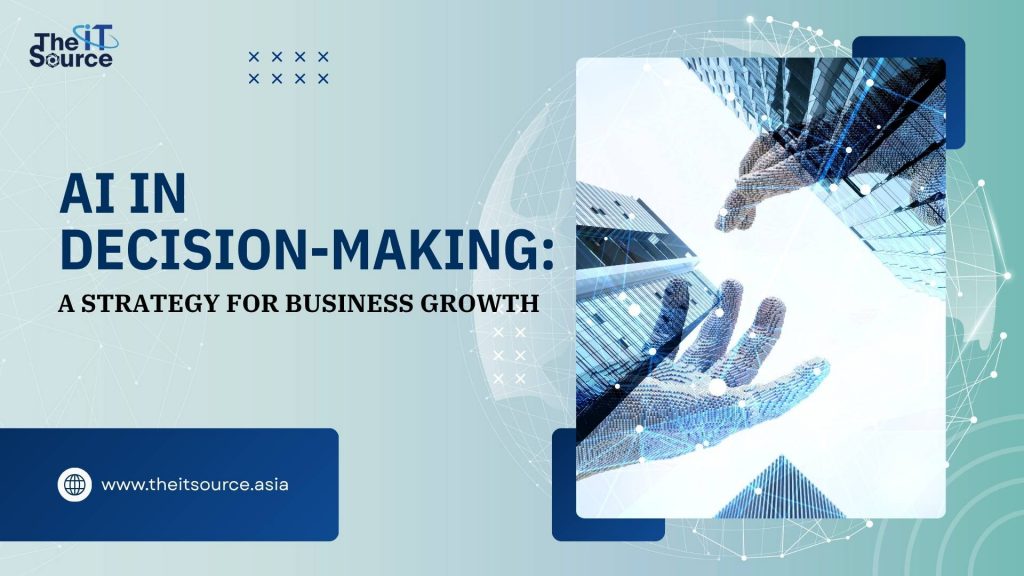
AI in decision-making: A strategy for business growth
What if you could make business decisions as quickly as you could click a button? What if you had the ability to predict market shifts, understand customer behavior, and streamline operations, all in real time?
For senior managers in finance, logistics, or trade, AI in decision-making isn’t just a luxury; it’s becoming a necessity for businesses that want to stay ahead of the curve and achieve operational excellence. Companies successfully leveraging AI for data-driven decisions are 5 times more likely to outperform their competitors.
In this article, we’ll explore how AI is revolutionizing decision-making, from implementing AI agents for customer service to automating core business processes. Discover why integrating an effective AI strategy into your business could be the game-changer you’ve been waiting for.
Why AI in decision-making is no longer optional
In today’s rapidly evolving business landscape, speed and precision are essential for making critical decisions. For senior managers in finance, logistics, and trade, traditional decision-making methods simply cannot keep pace with the changing environment. The real-time insights AI provides are crucial for staying ahead in industries where every second counts.
AI is now empowering businesses to transform their decision-making processes by harnessing predictive analytics, AI-powered automation, and advanced decision support systems. These tools allow companies to process large datasets in seconds, uncovering patterns and insights that would be impossible to detect manually. As a result, AI reduces decision-making time, minimizes risks, and opens up opportunities for smarter, data-backed choices.
For instance, in finance, AI can predict market movements with remarkable accuracy, allowing businesses to react ahead of market shifts. In logistics, AI forecasts demand, optimizes delivery routes, and streamlines inventory management, cutting costs and boosting customer satisfaction. In trade, AI analyzes global market conditions in real-time, enabling quick adjustments to pricing and supply chain strategies.
Without a robust strategy for AI-driven workflow automation, businesses are not only missing out on these advantages but also risk being outpaced by competitors who have already integrated AI into their operations. Implementing AI into your decision-making framework is more than just a technological upgrade. It’s a strategic necessity that drives operational efficiency and long-term success.
Core benefits of AI in decision-making
AI is revolutionizing the way businesses make decisions, offering speed, precision, and data insight that traditional methods can’t match. For senior managers in finance, logistics, and trade, understanding the core benefits of AI in decision-making is crucial. Let’s explore how AI can enhance your decision-making processes, making them faster, more accurate, and ultimately more effective.
1. Predictive analytics for smarter decisions
One of AI’s greatest strengths is its ability to forecast future trends with remarkable accuracy. By analyzing vast amounts of data, AI helps businesses anticipate market shifts, identify emerging customer behaviors, and uncover hidden opportunities. This empowers managers to make proactive decisions, rather than relying on reactive strategies.
In finance, AI can predict stock market movements, assess investment risks, and identify potential opportunities before they arise. In logistics, AI can forecast demand, optimize inventory, and streamline supply chain management. In trade, businesses can adjust pricing strategies and optimize operations based on predictive insights, keeping them ahead of market trends.
According to a Gartner survey, 79% of corporate strategists believe AI and analytics are critical to their success over the next two years.
2. Automating routine tasks to free up strategic thinking
AI doesn’t just improve decision-making by analyzing data. It also automates many of the routine tasks that slow down business operations. Whether it’s data entry, customer inquiries, or document processing, AI handles these tasks quickly and accurately, freeing employees to focus on higher-value decisions.
In industries like logistics, finance, and customer service, AI-powered workflow automation helps businesses run more efficiently, reducing manual work and minimizing human error. This allows managers to base their decisions on the most current and accurate information while freeing up time for more strategic activities.
3. Smarter decision support systems
AI enhances decision-making by providing intelligent decision support systems that offer actionable insights. These systems process complex datasets in real time, delivering the critical information decision-makers need to make informed, data-driven decisions.
AI’s insights help managers assess risks, uncover opportunities, and optimize outcomes. Platforms like The IT Source’s AI agent builder platform ensure that decision-makers have a complete view of critical business data when they need it most.
For example, in finance, AI can assist managers in assessing risk, simulating market scenarios, and selecting the best investment strategies. In logistics, AI optimizes delivery routes, forecasts supply chain needs, and allocates resources more efficiently. In trade, AI helps businesses quickly make data-driven decisions about pricing, supplier relationships, and market adjustments.
4. Risk reduction and management
Risk management is a crucial component of any business strategy, especially in high-stakes industries like finance and logistics. AI offers businesses a significant advantage by identifying potential risks before they escalate into major issues. By continuously analyzing both historical and real-time data, AI can flag emerging problems early, enabling businesses to take preventive action.
In finance, AI detects fraud patterns and flags high-risk transactions before they escalate. In logistics, AI predicts disruptions in the supply chain by analyzing global and operational data, allowing companies to take corrective action ahead of time. This proactive risk management is a key deliverable for our cloud architecture and system testing teams at TIS.
In trade, AI helps companies assess risks in international markets, enabling them to adjust strategies and mitigate potential losses.
In healthcare, AI is also proving valuable in risk management. A study published in Nature Medicine found that an AI-powered system for identifying sepsis achieved an 82% sensitivity rate, significantly improving early detection and reducing risk.
5. Data-driven, real-time decision-making
AI enables businesses to make decisions based on the most current and accurate data available. In today’s fast-moving business environment, real-time decision-making is essential. AI continuously processes incoming data and provides decision-makers with the insights they need, right when they need them.
Whether adjusting supply chain strategies in logistics, optimizing financial portfolios in finance, or responding to market changes in trade, AI ensures that decisions are made swiftly and with the most relevant information. This agility gives businesses the competitive edge they need to thrive in fast-moving industries.
Challenges and solutions in AI integration
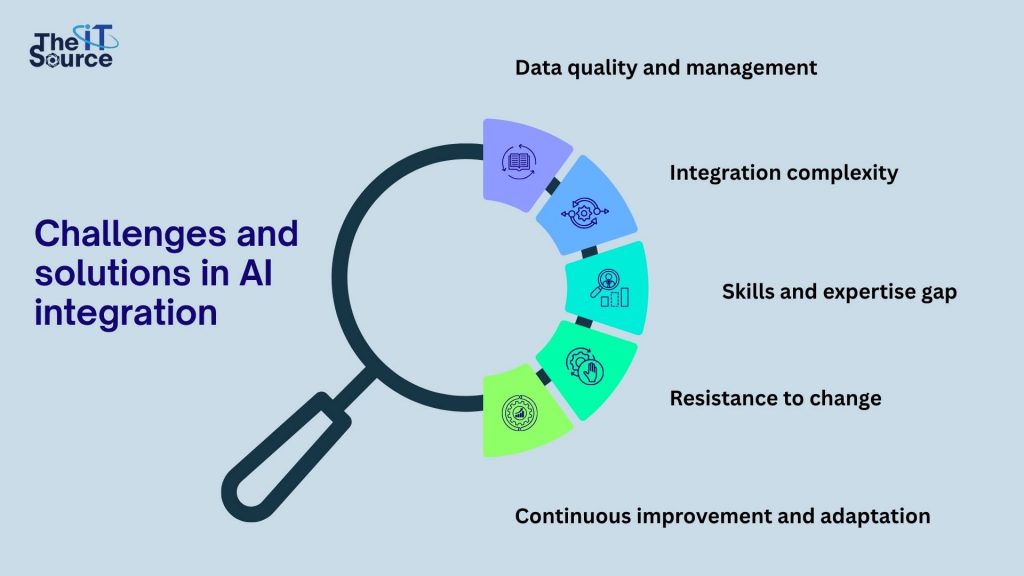
While the benefits of AI in decision-making are clear, integrating AI into existing systems comes with its own set of challenges. For senior managers in finance, logistics, and trade, understanding these challenges and knowing how to address them is crucial for unlocking the full potential of AI.
1. Data quality and management
AI’s effectiveness is directly tied to the quality of the data it processes. One of the most significant hurdles businesses face when adopting AI is ensuring their data is clean, accurate, and structured. Without this foundation, AI systems may provide inaccurate or misleading insights, which could hinder decision-making.
Solution:
To address this, businesses must invest in robust data governance and establish strong data management practices. Ensuring data is collected, stored, and processed correctly is the first step in making AI work effectively. Partnering with AI specialists like TIS ensures businesses have the right data architectures in place, guaranteeing accuracy and reliability from the start.
2. Integration complexity
Integrating AI into legacy systems can be complex and time-consuming. Many organizations still operate on outdated systems that aren’t compatible with advanced AI solutions. This complexity can create barriers to adoption, delaying implementation and potentially impacting business operations.
Solution:
TIS specializes in seamless AI integration, ensuring that AI solutions align with existing workflows and legacy systems. By selecting the right technology stack and focusing on cloud architecture and robust APIs, businesses can streamline integration efforts and facilitate a smooth transition to AI-powered solutions. Collaborating with experienced AI partners minimizes disruption to daily operations.
3. Skills and expertise gap
AI is a highly specialized field, and many organizations struggle to build in-house teams with the necessary expertise to drive AI adoption and manage the systems once they are in place. The skills gap can slow down AI implementation and hinder its long-term success.
Solution:
Businesses must either invest in AI training programs for their teams or collaborate with AI experts who can provide the necessary skills. TIS offers dedicated engineering teams and experienced AI professionals who can guide organizations through every step of the AI implementation process, bridging the skills gap efficiently and quickly.
4. Resistance to change
Introducing AI into business decision-making processes often encounters resistance, especially from employees who are accustomed to traditional ways of working. Some may fear AI will replace their jobs, while others may be skeptical of its effectiveness. Overcoming this resistance is essential to ensure smooth adoption.
Solution:
Education and clear communication are key. By showing employees how AI can enhance their roles rather than replace them, businesses can foster a more collaborative environment. For example, AI-powered tools like Staff Support Agents can handle repetitive tasks, allowing employees to focus on higher-value work. Involving employees early in the adoption process and providing ongoing support will reduce fear and increase acceptance. TIS helps companies align AI adoption with both business goals and employee needs, ensuring a smooth transition.
5. Continuous improvement and adaptation
AI is not a one-time implementation. To remain effective, AI systems require continuous monitoring, fine-tuning, and updates. The challenge lies in ensuring that AI models are regularly updated with new data and are adapted to evolving business needs.
Solution:
To keep AI performing at its best, businesses should implement a continuous improvement cycle. This includes regularly updating AI models with fresh data, assessing their performance, and making necessary adjustments. Partnering with experienced AI providers like TIS ensures that businesses have ongoing support to maintain and optimize their AI solutions, ensuring systems continue to provide valuable insights and remain aligned with changing business goals.
AI strategy for sustainable business growth
Building a sustainable AI strategy is not just about deploying technology; it’s about embedding AI into the long-term vision of your business. For senior managers in finance, logistics, and trade, the key to successful AI adoption lies in creating a framework that evolves with the business, consistently delivering value as the company grows.
Aligning AI with business goals
AI should be viewed as a key enabler of business success, not just a tool for solving immediate operational issues. Aligning AI projects with your long-term business goals ensures they provide value beyond mere efficiency improvements. AI has the potential to drive innovation, expand market share, improve customer experiences, and help scale operations efficiently. Senior managers must ensure AI becomes an integral part of the overall business strategy, adapting to shifting business needs.
For instance, integrating AI in logistics to optimize supply chains can reduce operational costs and enhance customer satisfaction by ensuring timely deliveries. In finance, AI can enhance risk models and enable proactive decision-making, giving businesses a competitive edge.
Fostering a data-driven culture
To maximize the value of AI, businesses must prioritize a data-driven culture. AI’s effectiveness depends heavily on the quality and accessibility of data. Establishing strong data governance and improving data management systems are essential first steps in ensuring AI’s success. Senior managers should make sure that clean, structured data is accessible at all levels, empowering teams to make informed, data-backed decisions.
Investing in data literacy programs can help teams understand and utilize data effectively. Partnering with skilled providers like TIS offers dedicated AI engineers who work alongside internal teams, bridging knowledge gaps and establishing the robust data management systems essential for AI model development.
Building scalable AI systems
As businesses grow, their AI systems need to be able to scale with them. A scalable AI system ensures that as an organization expands, its AI solutions can handle increased data volume, complexity, and new business challenges. Developing cloud-based AI architectures and flexible technology stacks is key to building systems that grow with the business.
TIS specializes in helping clients design scalable AI systems starting from the MVP stage, enabling businesses to scale solutions efficiently without costly overhauls or operational disruptions. Creating AI systems with scalability in mind also allows businesses to quickly experiment with new AI models and adapt to evolving needs.
Commitment to continuous innovation
AI is a rapidly evolving field, and businesses must ensure their AI systems stay ahead of the curve. Implementing a process of continuous improvement is crucial to ensure AI remains relevant and effective over time. AI models need to be updated regularly with new data, adapted to changing market conditions, and integrated with the latest technological advancements.
Working with experienced AI partners like TIS ensures businesses have access to cutting-edge AI solutions and ongoing support, keeping systems optimized and adaptable for future developments.
Measuring AI performance
A successful AI strategy must be based on measurable performance. By setting clear KPIs for AI projects, businesses can track progress, evaluate effectiveness, and identify areas for improvement. Regular performance evaluations enable AI models to be refined and optimized, ensuring they deliver the desired results. This ongoing process of measurement and adjustment is key to maintaining AI’s effectiveness and ensuring it aligns with business goals.
Integrating AI into your business strategy is not a one-time effort. It requires continuous learning, adaptation, and a commitment to aligning AI with the company’s long-term vision. By focusing on scalability, data-driven decision-making, and continuous improvement, businesses can create an AI framework that drives innovation, efficiency, and sustainable growth. The next critical step is selecting the right partner to execute this strategy effectively.
Conclusion: How to leverage AI to stay ahead
AI isn’t just the future of business decision-making; it’s the present. In today’s fast-paced business environment, staying ahead of the competition means integrating AI into your decision-making processes now rather than later. For senior managers in finance, logistics, and trade, AI offers strategic advantages that help optimize operations, reduce risks, and drive sustainable growth.
The key to leveraging AI effectively lies in having a clear strategy. Align your AI initiatives with your business goals, embed AI into your existing workflows, and cultivate continuous learning to stay ahead of the curve. By doing so, you not only enhance decision-making but also position your company as an industry leader in an increasingly data-driven world.
AI is transforming global industries, and the time to act is now. The companies that integrate AI today will set the pace for tomorrow. Don’t let your competitors move faster. Start building your AI strategy now and watch your business thrive.
To take the first step, reach out to TIS. Our team of experts is ready to help you design and implement a tailored AI roadmap that aligns with your long-term goals. With our expertise in seamless AI integration and dedicated engineering support, we will help you unlock the power of AI and transform your decision-making for the future.